
Ikebana, Photography, and the Art of Meaning
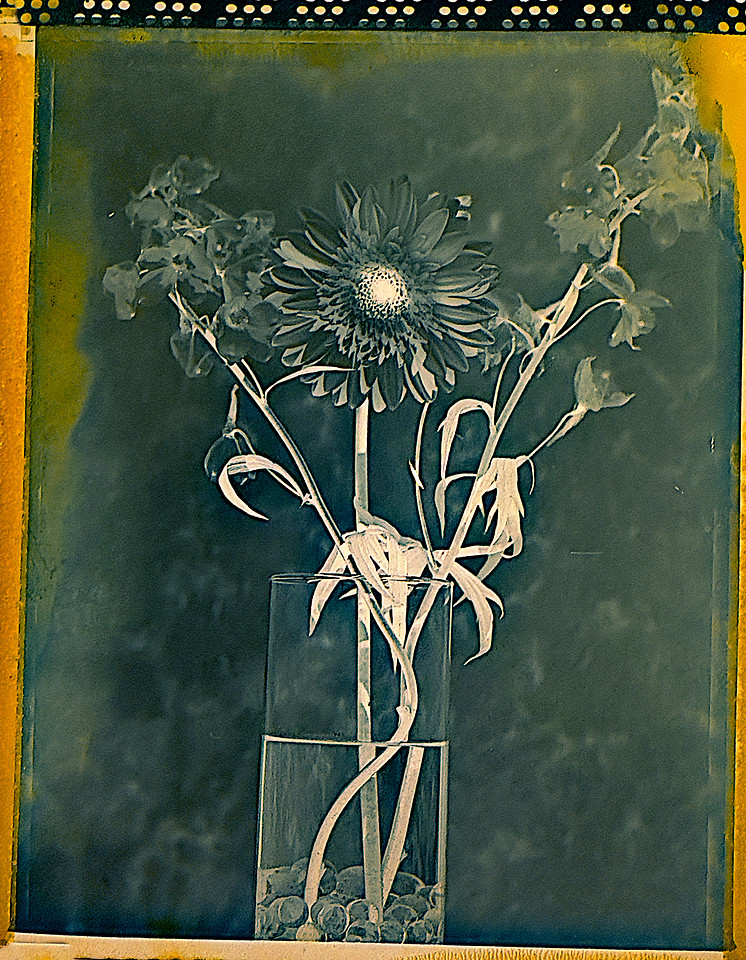

“Ikebana”
There is a lot to be learned from a study of Japanese arts, all of Japanese culture in fact. Their aesthetic sensibilities touch every aspect of life and inform how they relate to the world around them. Yes, there is much to learned about the Art of Meaning. Photography too, as an art form, can be informed by aesthetic principles developed to such a high degree by a culture dedicated to finding beauty and harmony in the most simple, mundane things. Finding the perfection in the imperfect, and thereby elevating one’s very life to a work of art and meaning.
The image above is simply titled “Ikebana”, and is an homage to the principles that inform the various arts of Japanese culture. So what is Ikebana and what are its principles?
“Ikebana floral arrangements look sculptural, often only featuring a single flower, with careful consideration given to shape, form and line. Unlike Western arrangements, which are largely informal, ikebana's are precise and meaningful.” ~ Chiana Dickson
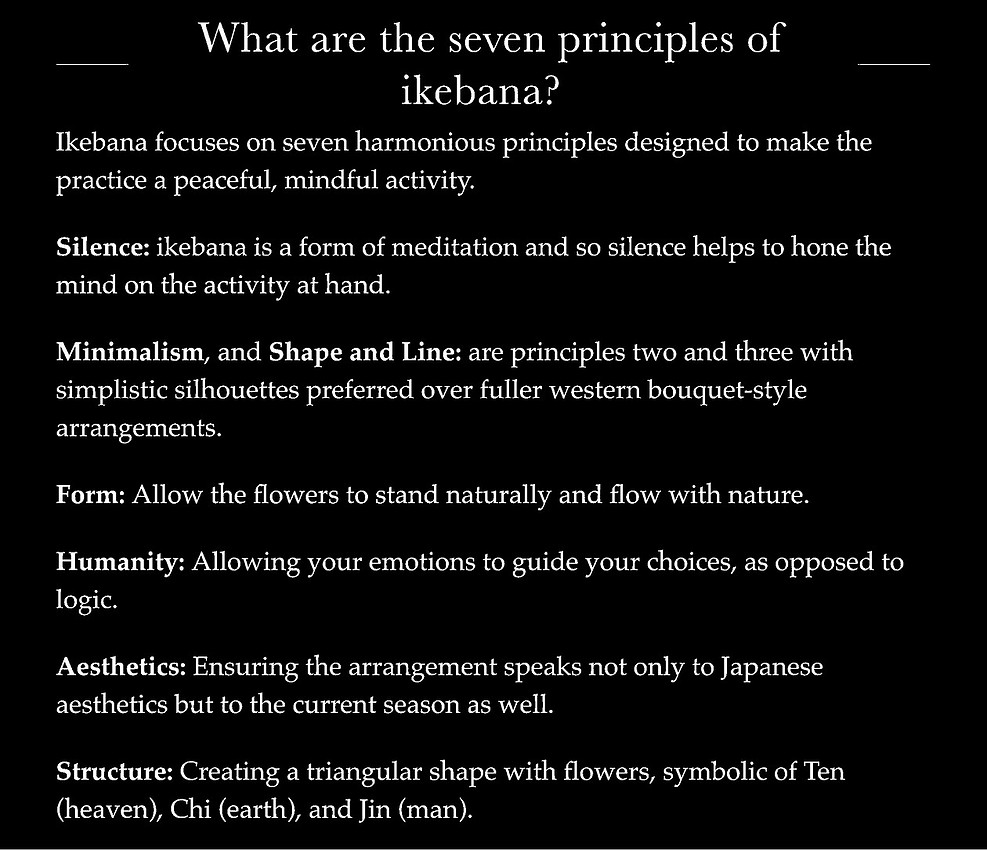
Keeping to informed principles and meaningful intentions is the very essence of the creative experience. As a photograph, the image above touches on several Japanese arts, and as such carries meanings beyond simply being a photograph of a flower. The “base” of this image is a physical Polaroid Type-55 black and white film negative of a flower arraignment I photographed over 25+ years ago, but never did anything with beyond developing the negative. I recently came across this negative in a box with others I had saved, perhaps with the expectation to create something meaningful one day. A long journey in time and life experiences and distances to today, when the image finally has its meaningful completion.
The film this image was photographed on so many years ago no longer exists, that is, the company Polaroid had gone out-of-business many years ago, and the film is no longer produced. There was always a unique quality to the various Polaroid films that no other film could duplicate. In the case of the Type-55, there was always a “silk-like” quality to the emulsion that had to be seen up-close to be appreciated. I’m grateful I still have a few of these film negatives to continue creating with, albeit in a digital process.
Aside from the obvious subject of flower arranging in the ikebana style, there are other Japanese arts being payed homage to in this image. I have written extensively on my use of the Polaroid Type-55 film negatives in a series of blogposts here. One of the most compelling features of this old-school analog material for me was the sheer random imperfections inherent in it. You could never get the exact same “flaws” from one piece of film to another. They were completely unique one-offs. That really appealed to both my personal sensibilities, and I believe to Japanese aesthetic principles. It’s in that spirit that I often (though not always 😉) embraced the “flaws” of the Polaroid processing marks.
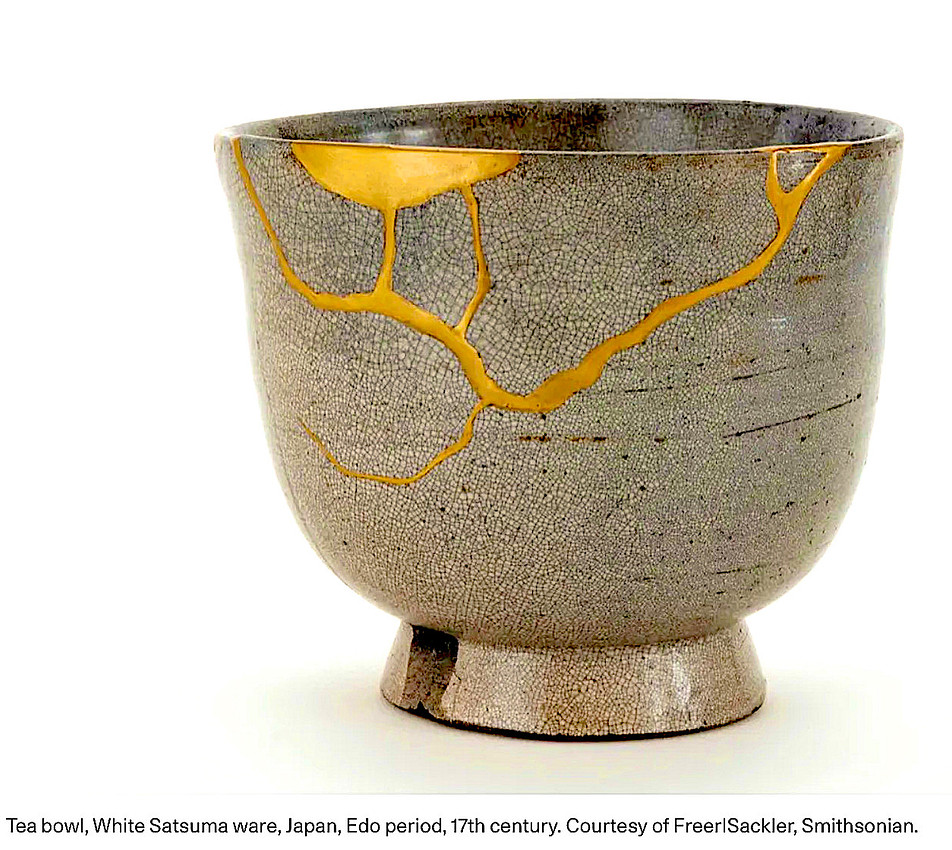
There is a Japanese art called “Kintsugi” which means golden seams, and is the art of repairing broken pottery by using gold to put the pieces back together and fill in the seams. It is a very ancient art, and appeals to my sensibility to let nothing go to waste, and to finding a beautifully creative way to utilize what some consider “useless.” My image “Ikebana” utilizes this Japanese aesthetic in a delightful way by using the golden color to fill in the “flaws” and broken (missing) emulsion as a result of the analog process. It wasn’t until I had developed this image using my current digital tools some 25+ years after the image was photographed that this particular Japanese art of Kintsugi became apparent, and lent an added aesthetic meaning to the overall contemplation of the image.
Finally, I had decided to keep the image in its “negative” aspect rather than converting it to a positive as our eyes typically see it because the reversal of values, light is dark and dark is light, appeals to my feeling of embracing what may seem to be negative and finding meaning and beauty in it. I think there is a Japanese principle of art about embracing “negative space” in all the arts; music, sculpture, painting, gardening, and I would include photography equally so.