
The Cubist Clock - Or Does Anybody Really Know What Time It Is?
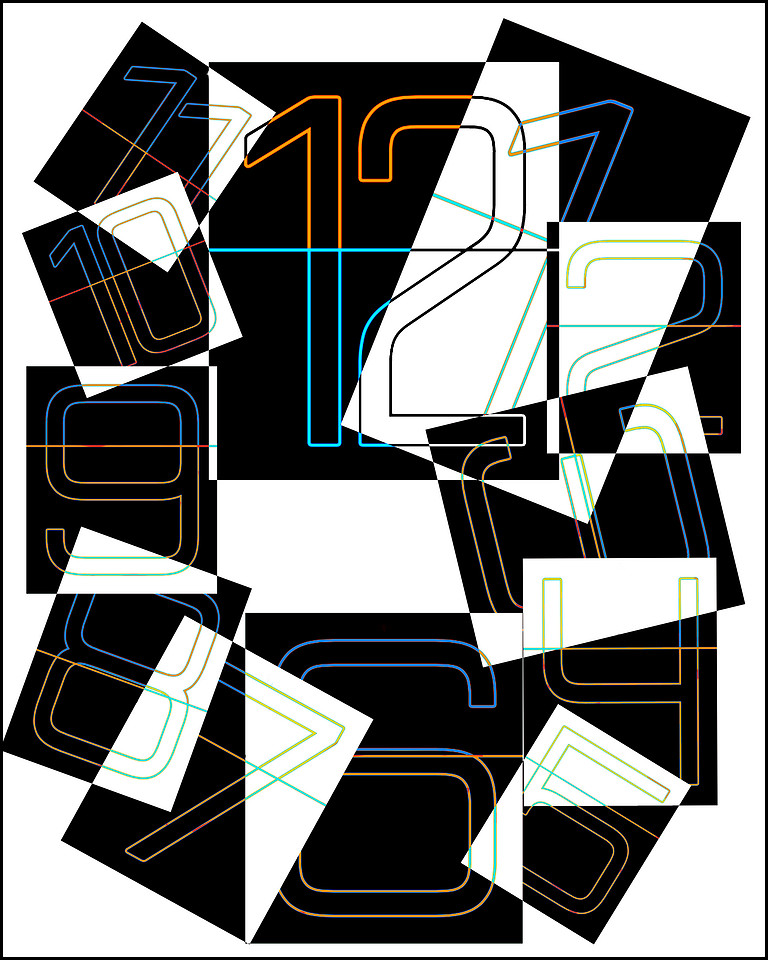

What to do for inspiration? Where does it come from and how do you harness it, or rather how do you flow down the river where inspiration takes you? Sometimes, your own work can inspire you to create something new. It can be a “seed” of an idea planted in you that finds expression in sometimes unusual ways and methods.
The image above which I call “The Cubist Clock” was inspired by the image below taken from my previous blog post:
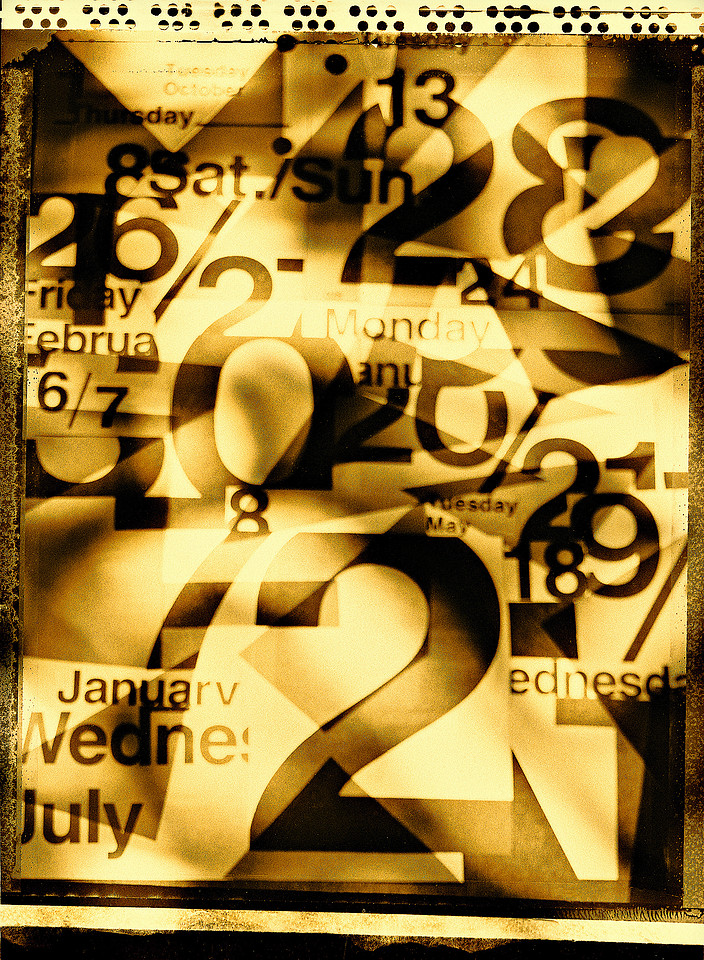
And if you read my previous blog post, you know this image was inspired by, or rather iterated from this original image:
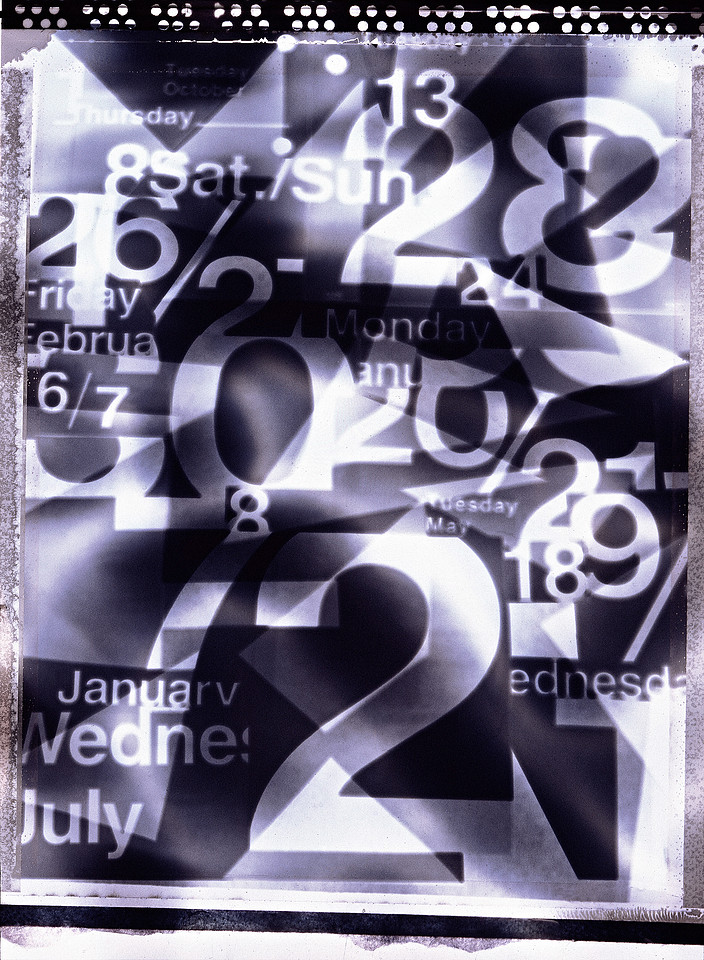
And all of this was of course inspired by the brilliant artworks of Pablo Picasso and Georges Braque, who not only invented the artform we call “Cubism”, but all of its iterations as well. So while my original image was the inspiration for “The Cubist Clock”, it was a totally analog, film based image that had a very organic creative process involving scissors, adhesive, paper and neutral density gels, along with black & white Polaroid and color 4x5 film, oh and a wavy piece of glass too! It was a totally “arts and crafts” type of project. I wish I had examples of the various steps of the process to show how it came together. It was a very laborious, painstaking process of trying to creatively figure out how to make the relatively mundane subject of a calendar transform into a Cubist bit of art. Alas, all that I have many years after creating it is the final Polaroid image and the color film that was made from re-photographing it.
Now that brings me to the inspiration for “The Cubist Clock.”
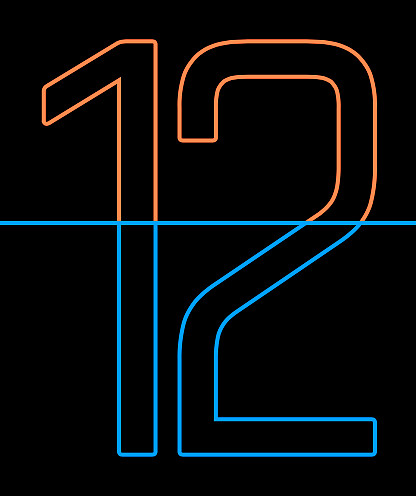
I got the idea to create a purely digital image based on the aesthetic concept of my analog film image. I had accidentally discovered I could make a screenshot of my Apple Watch screen which automatically saved to my iPhone. Interesting. The concept of creating a unique clock face from different screen captures of each hour was born.
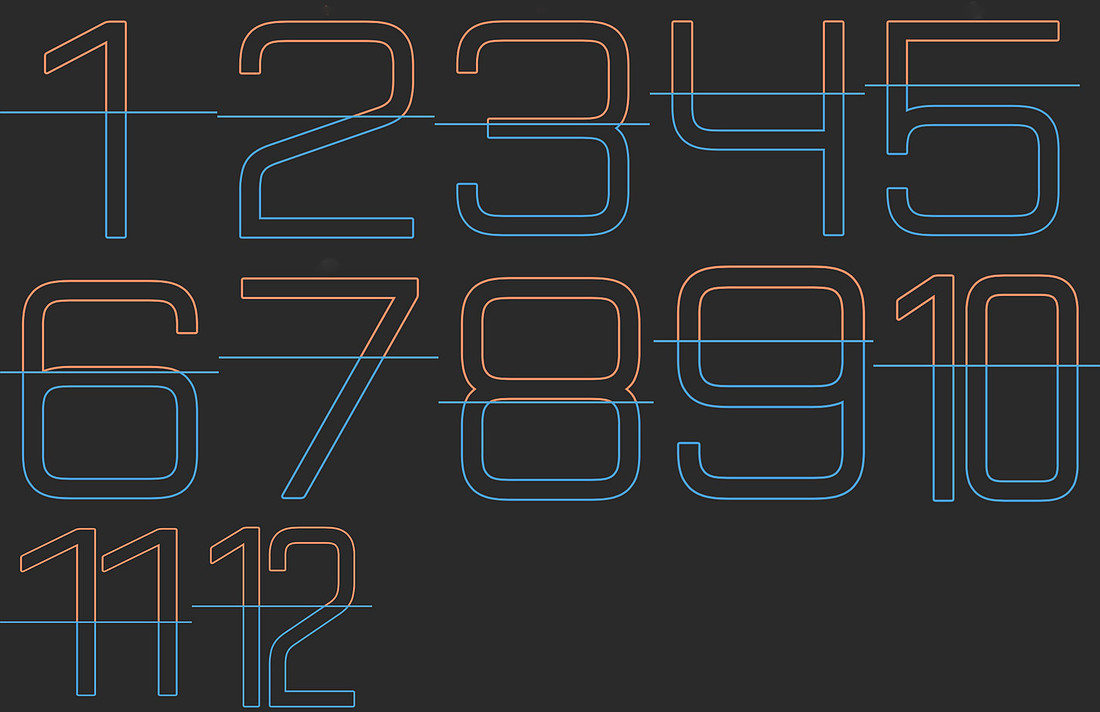
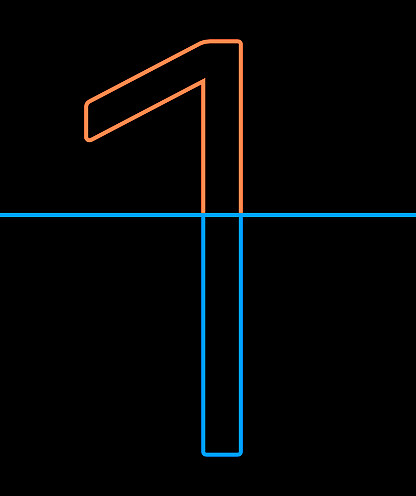
Now while you might think that capturing a screen shot of each hourly numeral would be a fairly straight forward simple task, the fact was it was not. What should in theory take 12 hours as the watch ticked off each hour, in reality it took several days to do the 12 screenshots as it was a bit too easy to get distracted as time went on and I missed a few hours here and there, which required waiting for the next 12 hours until that numeral came around. It took a good bit of focus and attention to make sure I captured each of the hours. I also knew there was no way I could make the horizontal line of the second hand in this particular watch face (Apple’s FLUX) match up across each hour, and I just hoped it wouldn’t affect the whole final image. I actually think it was better for the disjointed Cubist aesthetic that they were “misaligned.”
So my process was to lay out all the numerals in a clockwise pattern starting with the 12 and turning each in an arbitrary way to give it visual interest and scaling the numerals differently to fit the vertical composition. I knew in order to give it a “Cubist” feel and based on my previous experience with the analog process that I would have to find a blend mode that would be suitable for each layer. I settled on the “Divide” blend mode in Affinity Photo 2. I also played with moving some of the layers up and down in the layer stack so the blend mode gave me the right look in relation to the numerals. I think that from an inspired idea and problem-solving how to do it, to go from an Apple Watch as a capture device to the iPhone and then to an iPad Pro with Affinity Photo 2 to pull it all together is an amazing process! The thinking digitally in terms of “how-do-I-do-this?” is quite different than the thinking in analog film terms of how to achieve something, but what they both share is having to think in unique ways and using the tools you have in ways they may not have been intended to be used. It takes “Imagineering!”
All in all I’m pleased with the results. I didn’t set out to duplicate or come as close as possible with digital only tools to re-create what I had achieved with an analog process, but to see if I could create a variation on a concept with purely digital means. The analog film image and its process of creation was a vastly different experience than the digital process. In its own way, and I think because I was problem-solving in an organic way requiring a certain “physicality” as it were as opposed to the somewhat “passive” way of working with software, I find the film experience was more enjoyable. As much as we are amazingly able to do with digital image making, a part of me does miss the analog playground! 🎞️