
What Is Old Is New Again ~ The Legacy Of Polaroid Film
 057
057
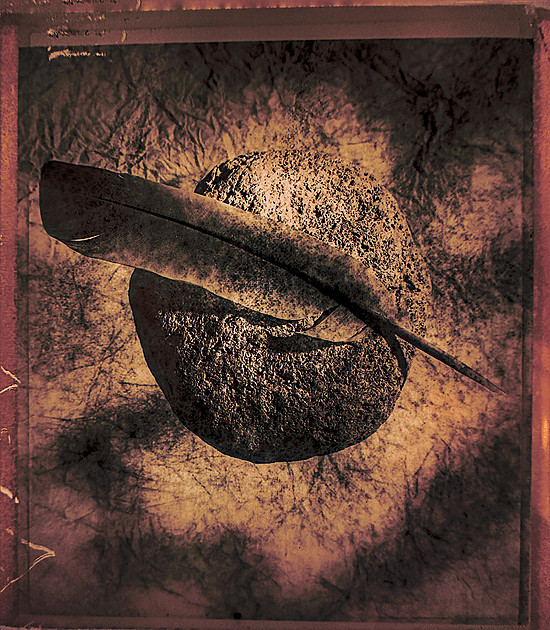
I must admit, I am having a lot of fun revisiting some older Polaroid film images I originally created some 25+ years ago and giving them new life in the digital darkroom, and in some cases creating their final iteration. The above image, titled “Feather, Stone, and Light” after an album and song of the same title by Native American flautist R.Carlos Nakai is one example of that process.
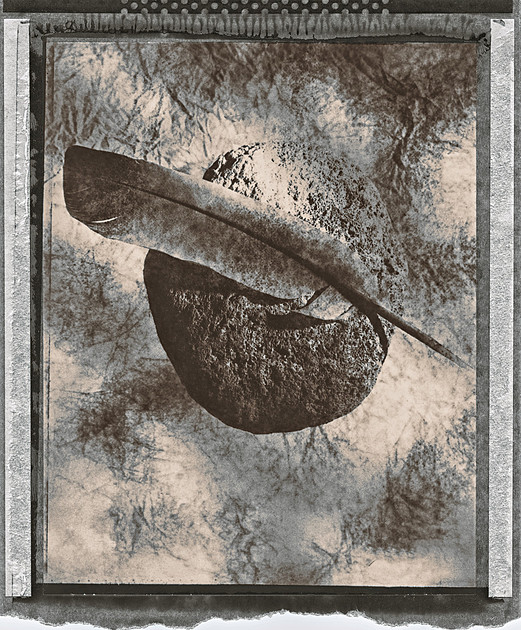
The original image on Polaroid film Type-59 color film was a “positive” print I liked while trying to create a Polaroid Transfer image on watercolor paper some 25+ years ago. You can read all about that and the making of the image I chose at the time here. With Polaroid films, as I’ve said, the beauty and magic of the images is tied inextricably with the completely random rips, tears, and processing marks left by the development process.
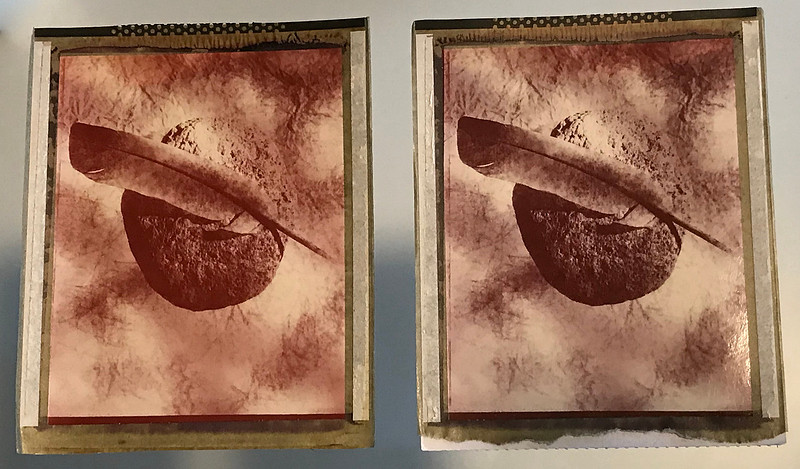
Each “pull” of a Polaroid gives you different processing marks, which makes each piece a one-off unique work of art. Then you are left with deciding which do you like the most. These two images were part of trying to create the Polaroid Transfer onto watercolor paper, which resulted in half way processed prints. As the Transfers were not working to my liking, I decided to fully process the print, which you see above these two. At the time, I thought it was the best version of the image.
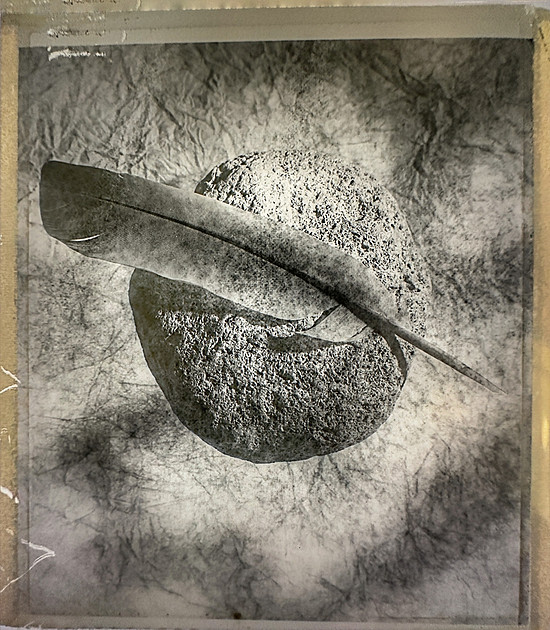
But I recently found a Black and White version of it on a Polaroid Type-55 film negative, which I must have “re-photographed” from another Type-55 negative in order to get this positive film version. I decided to take this film version and bring it into my digital darkroom and see if I could create an iteration that did the image justice.
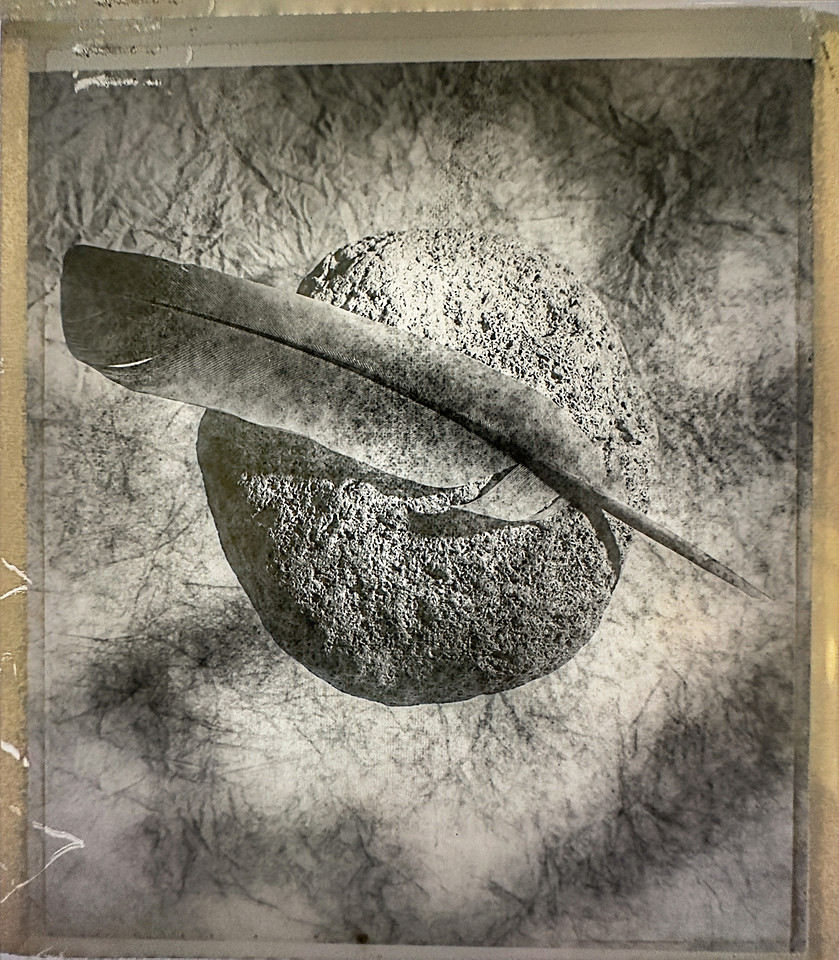
It was simply a matter of finding the right “look” or LUT which would bring the image new life, and situate it more within the Native American spirit that inspired its creation all those years ago. This final iteration feels very “earthy”, grounded and much in tune with Native American tradition.
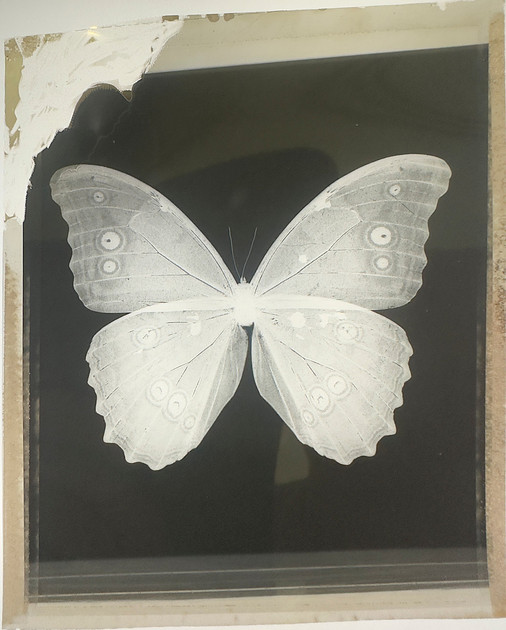
Another Black and White Polaroid Type-55 negative I discovered in what I’m now calling my “Lost Box” is this one above, a different take from the original version you can see in :: The LAB :: gallery. That iteration was created from a “re-photographing” of a Polaroid negative onto another Polaroid negative for a positive image which was then ‘re-photographed” onto color chrome (positive) film. This particular negative I found in the “Lost Box” really appealed to me for its obvious and extreme “flaws” of torn and missing emulsion and processing marks. It was so incomplete, and there really was nothing about it that said it was a “keeper” worth working on, but I knew I could give it new life and a finished aesthetic.
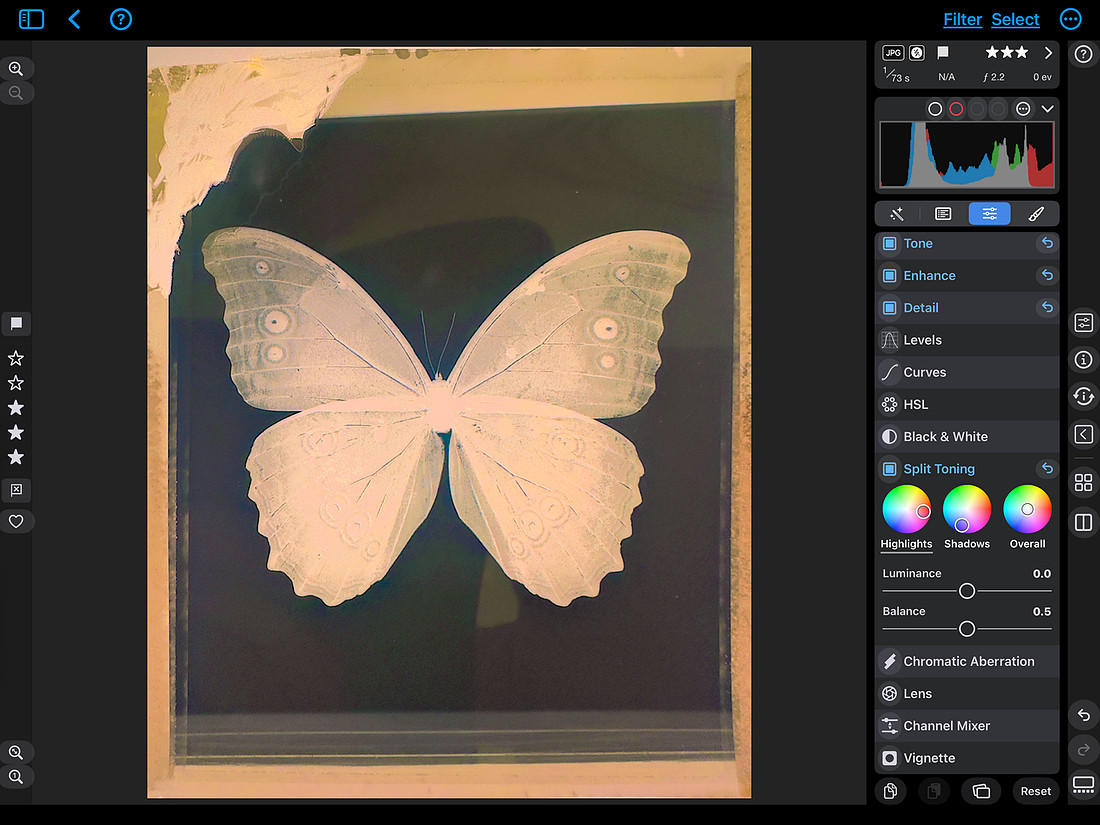
The first part was to bring it into my digital darkroom (Nitro Photo) and giving it some adjustments, including adding some subtle color with the Split Tone tool. Even in Black and White Polaroids there is an element of color that is part of the natural processing.
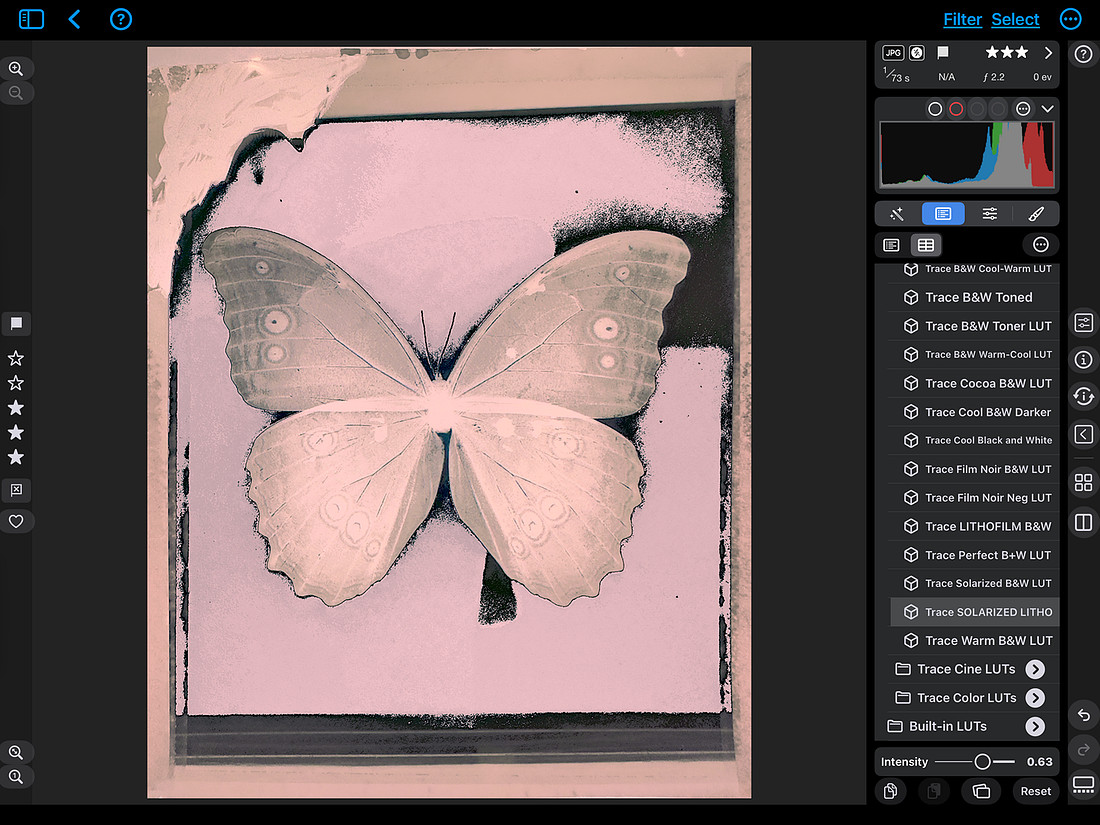
I then went through my process of finding an appropriate LUT, usually from my collection of customer LUTs, but as the color ones weren’t giving me anything I liked, I turned to my Black and White LUTs and chose one of the more unique, and least used among them, the SOLARIZED LITHO, which gave this image just the quality I was looking for. Something intriguing was starting to make this image come alive! But it still needed something more. Since you can’t add a LUT on top of a LUT in Nitro (unfortunately), I had to export the image as a Tif version and work on that.
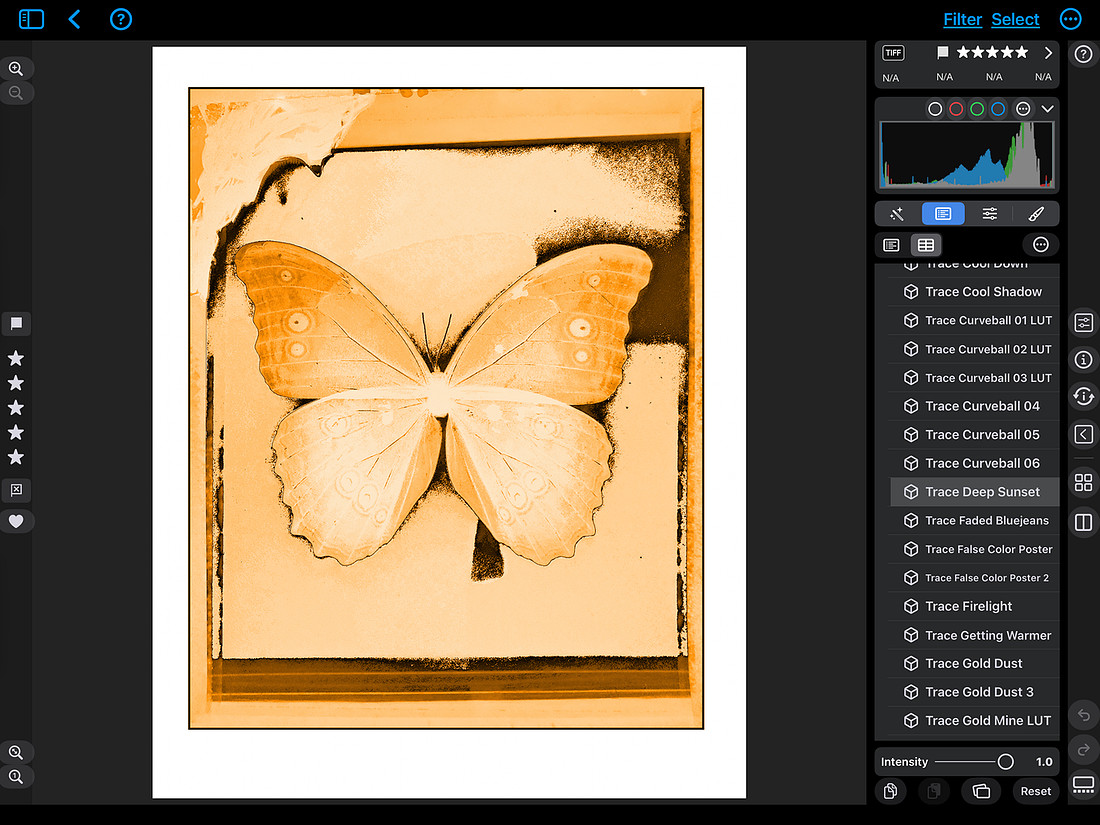
I then chose my custom Deep Sunset LUT which gave this image the perfect look to give it the final dose of color it needed.
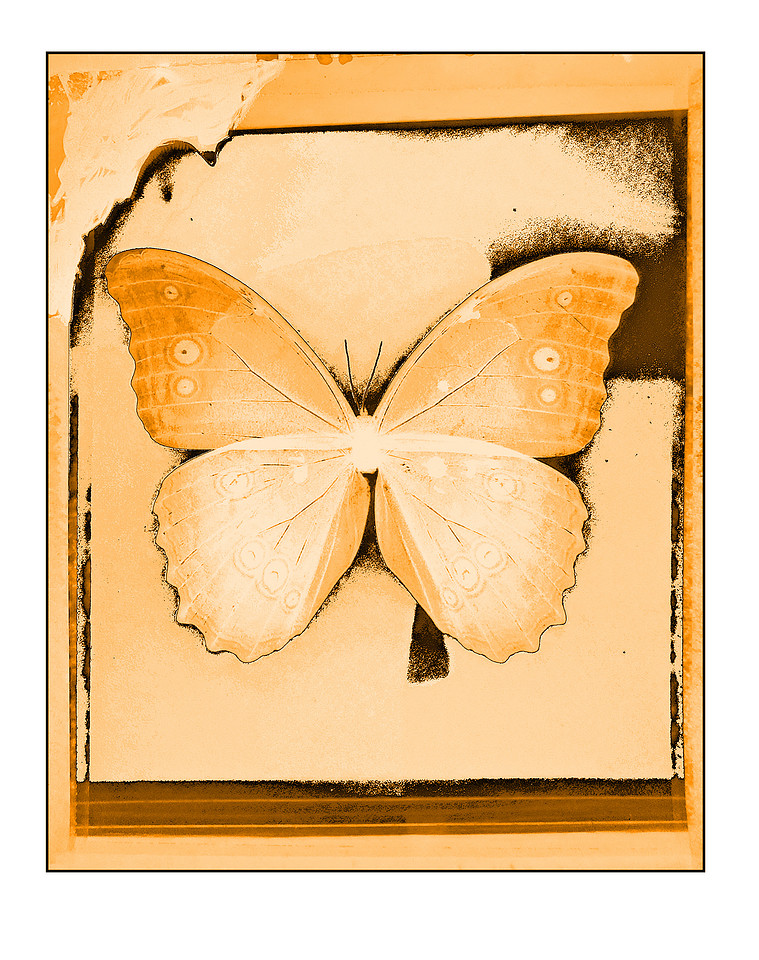
I really love this final iteration of the piece I call, “Flutterby II”’, especially as it came from such an arguably flawed, mistake of an image. I’m glad I didn’t discard it for not being a “perfect” negative, and indeed I saw potential in the damaged. THAT is the profound legacy of Polaroid films, that it is their inherent imperfections that make for the most beautiful fine art images.
|
January
(1)
February (1)
March
(1)
April (1)
(5)
May (5)
(4)
June (4)
(1)
July (1)
August
September
(3)
October (3)
November
December
|
(1)
January (1)
(2)
February (2)
(2)
March (2)
(1)
April (1)
(2)
May (2)
June
(1)
July (1)
August
(1)
September (1)
(2)
October (2)
(3)
November (3)
(2)
December (2)
|
(3)
January (3)
February
(2)
March (2)
(3)
April (3)
May
June
July
August
September
October
November
December
|
January
February
March
April
May
June
July
August
September
October
November
December
|
January
February
March
April
May
June
July
August
September
October
November
December
|
January
February
March
April
May
June
July
August
September
October
November
December
|
January
February
March
April
May
June
July
August
September
October
November
December
|
January
February
March
April
May
June
(1)
July (1)
(1)
August (1)
September
October
November
(2)
December (2)
|
(1)
January (1)
February
March
(1)
April (1)
May
June
July
August
(2)
September (2)
(2)
October (2)
November
(1)
December (1)
|
(3)
January (3)
February
(1)
March (1)
(2)
April (2)
(2)
May (2)
June
July
August
September
October
November
December
|
January
February
March
April
May
June
July
August
(1)
September (1)
(1)
October (1)
(11)
November (11)
December
|
January
February
March
April
(1)
May (1)
(3)
June (3)
(2)
July (2)
(1)
August (1)
September
October
(2)
November (2)
(2)
December (2)
|
(2)
January (2)
(1)
February (1)
March
April
May
June
July
August
September
(2)
October (2)
(1)
November (1)
December
|
January
(2)
February (2)
(1)
March (1)
April
(1)
May (1)
(1)
June (1)
July
(1)
August (1)
September
October
(1)
November (1)
December
|
(2)
January (2)
February
(1)
March (1)
(2)
April (2)
May
June
July
(1)
August (1)
(2)
September (2)
October
November
December
|