
Behind-the-Scenes : The Making of “Ikebana”
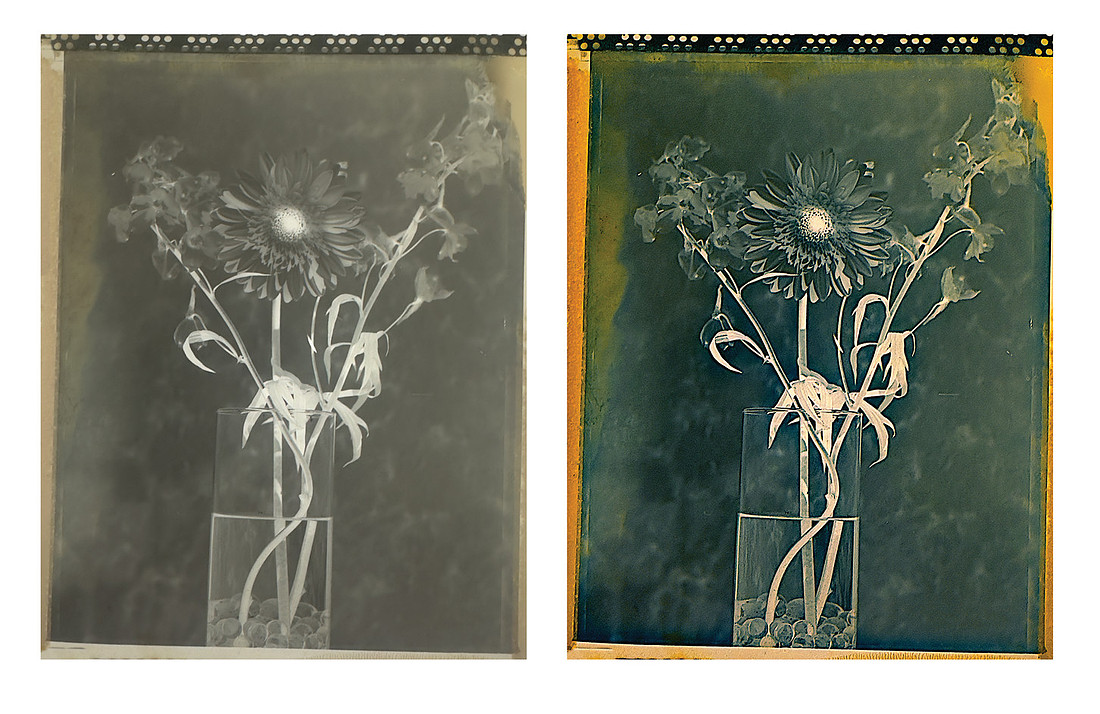

As a follow-up to my previous post, let me tell you in detail what went into the making of my piece, “Ikebana”, and how meaning was found in its making. There is a thread which runs through Japanese culture, through all of its “arts”, from painting, sculpture, architecture, dance, music, the tea ceremony, and to the martial arts and beyond. That thread I call “purposeful intention.” Everything from gardening, to food preparation (think of sushi 🍣) is guided by a purposeful intention based on principles of harmony.
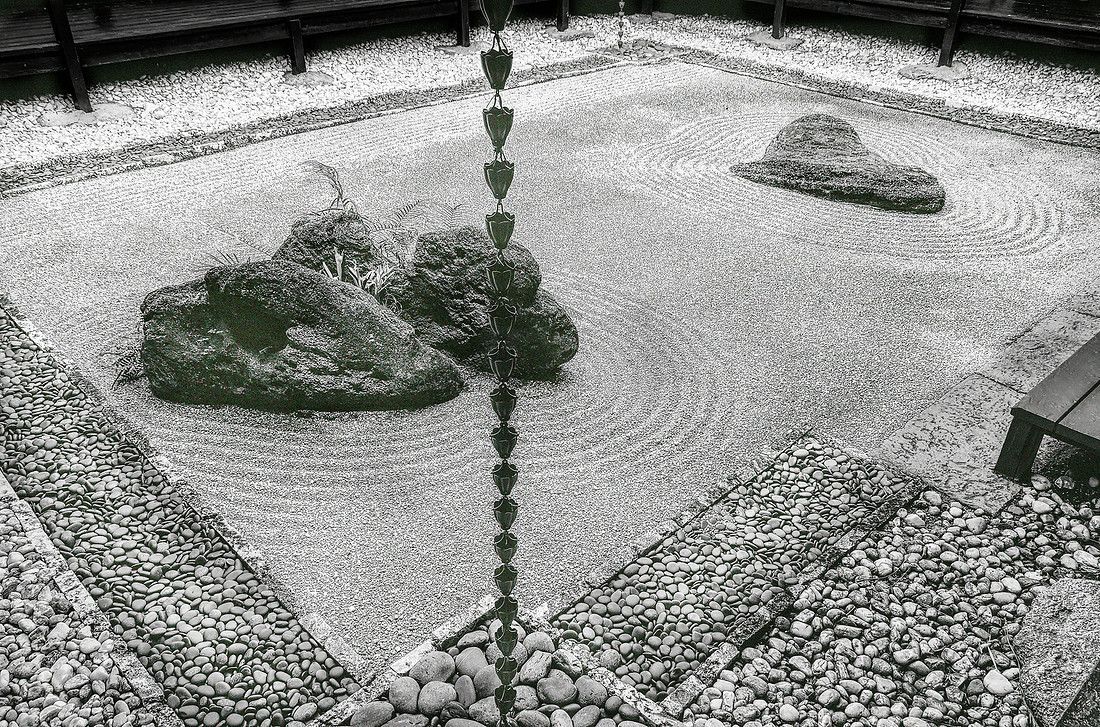
Now while the final piece I created called, “Ikebana” was originally created based on purposeful intention, it didn’t carry that thread throughout its making. You see, by its nature, it couldn’t have.
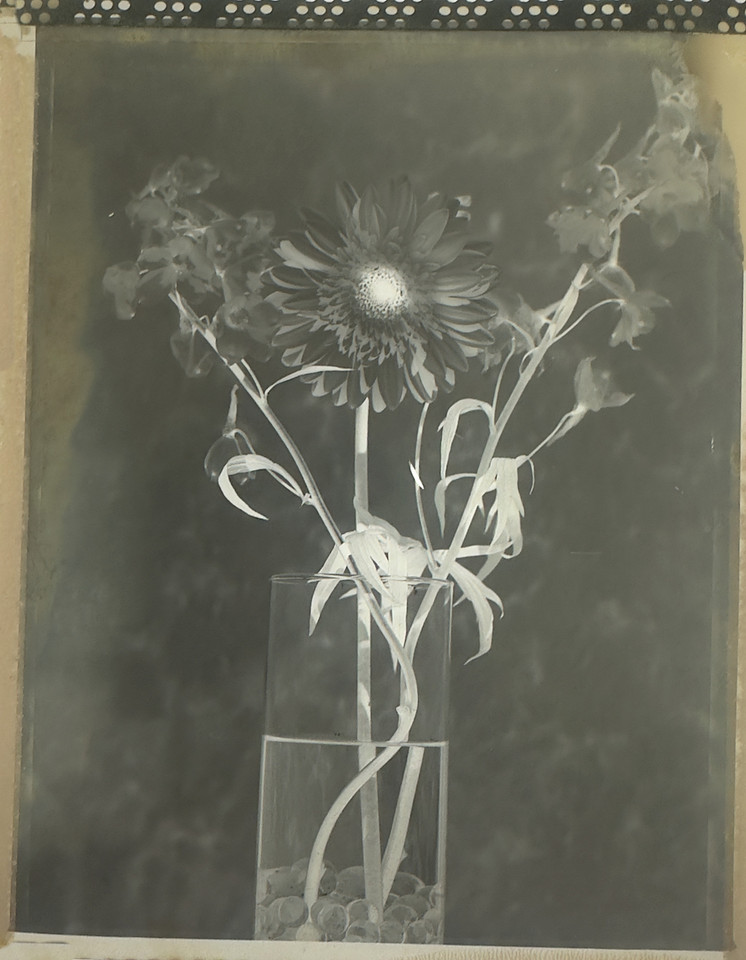
As a photographer, as soon as I made the choice to use a certain type of film (Polaroid Type-55) I gave up the the idea of purposeful intention, since the very material I was using had unique, uncontrollable “flaws” that I had no way of guiding purposefully. It was all up to chemical chance how it would come out. As to that, I didn’t have a purposeful intention for the image any longer, and so it sat in a box with other experiments for more than 25 years!
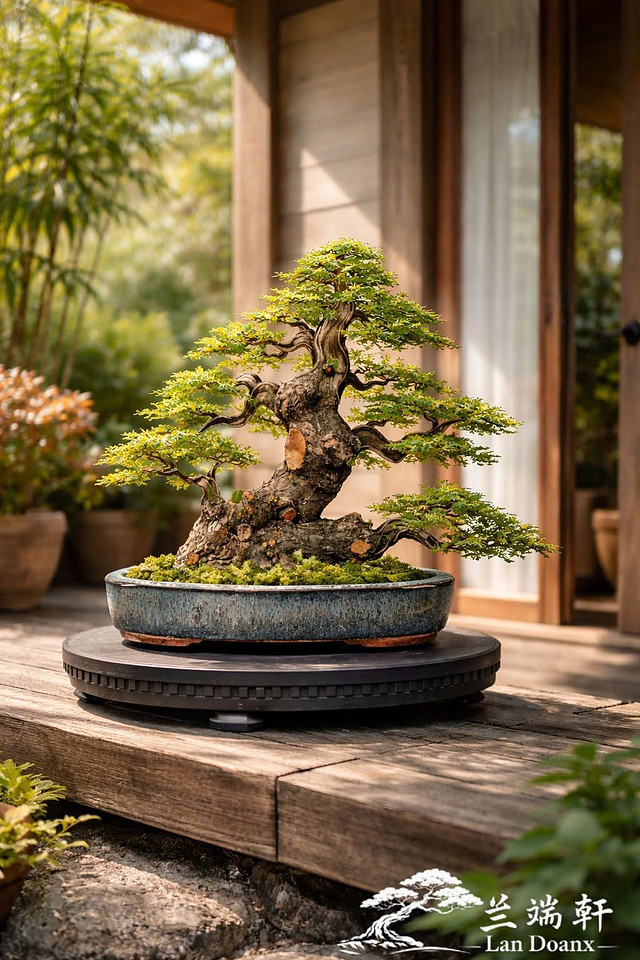
During those ensuing years I happened to become very “consumed” with the Japanese Art of Bonsai cultivation, at one point having over 100 trees in my collection (the above is not mine).
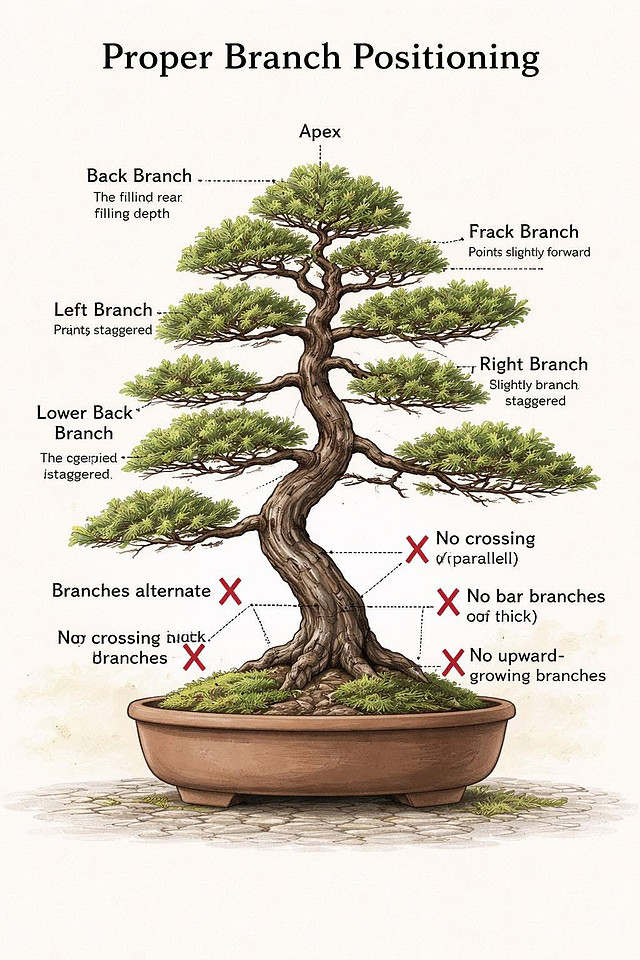
I learned the principles of that particular discipline and the aesthetics of working with a living being to shape what it would become. With Bonsai, every detail of the process, from plant selection to roots trimming and pottery choice, as well as all the branch cutting and wiring to give the tree the shape it is to become are all guided by the purposeful intention of both the master and the plant together.
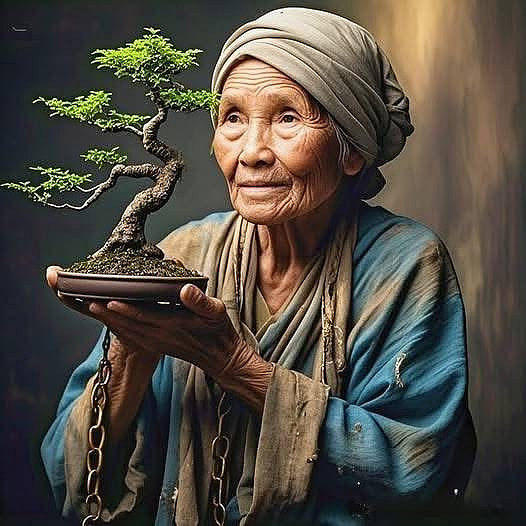
Many of these trees are so well cared for throughout their lives that they live for hundreds of years and are passed down for generations. I learned a great deal over the years from Bonsai cultivation, as well as generally observing Japanese culture and the role that aesthetics and harmony factored into everything they do. But how would that help me in my photography and in particular, with helping me see what would ultimately become my “Ikebana” image? The answer to that question lays in the quality of “recognition” or the ability to be aware of when something beyond purpose and intention has occurred. It is essentially an intuitive sense that cannot be fully foreseen or even articulated.
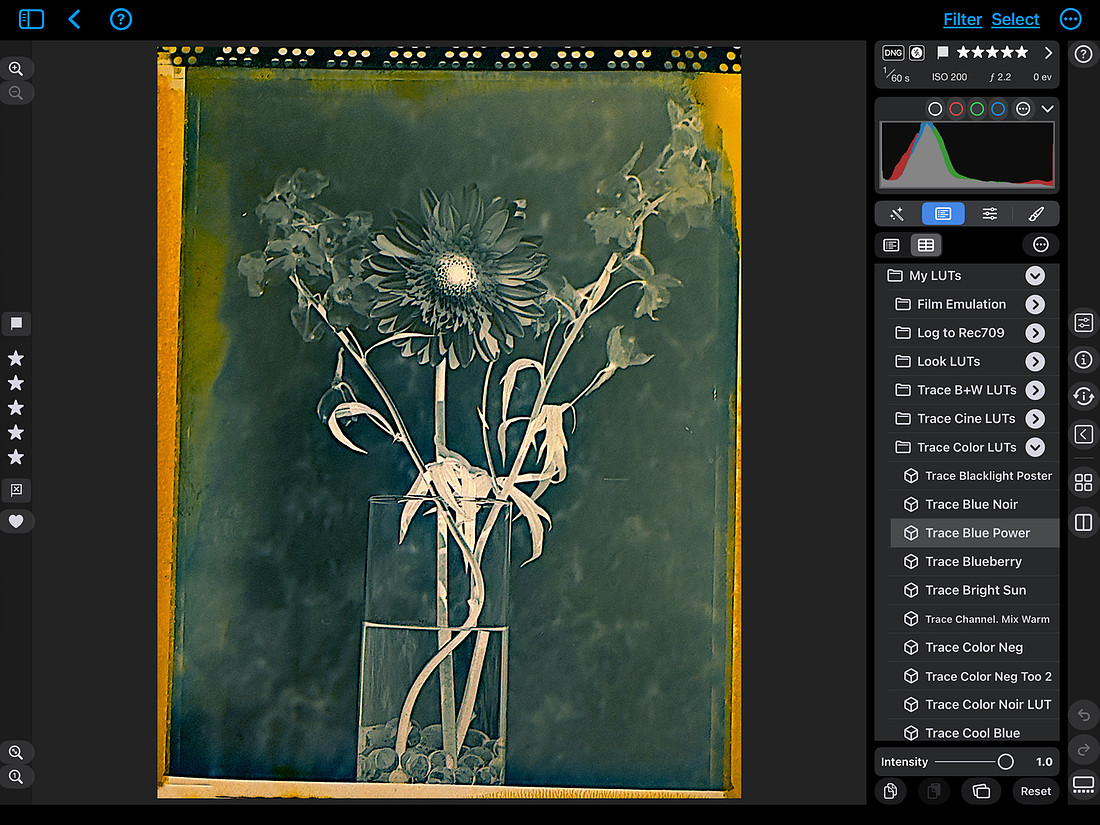
That intuitive moment came when I took that “flawed” Polaroid negative from the box, and since I no longer had a flatbed scanner or even a “proper” pro camera, I used my iPad as a backlit surface and my iPhone to capture (scan) the negative, adding even more “flawed” quality to the image. Even though it is a black & white negative, there is some slight coloring from the chemical processing, particularly along the edges. Because of this, when I brought the pseudo-scanned image into my digital darkroom to see what I could make of it, I still had no purposeful intention in mind. Here is where that intuitive “recognizing” part comes in. It was simply saying my mantra of “what if…?” that I recognized the image had become what it needed to be. It was happenstance when I selected my custom Trace Blue Power LUT that the image came to life! A few other subtle adjustments and the image was complete.
As I’ve said before in other posts, it is hard to know exactly how a LUT will react to colors and tones in an image. The fact that this particular LUT “reacted” to this image in this way, bringing out all of the qualities that immediately brought to mind other Japanese art aesthetics was remarkable.
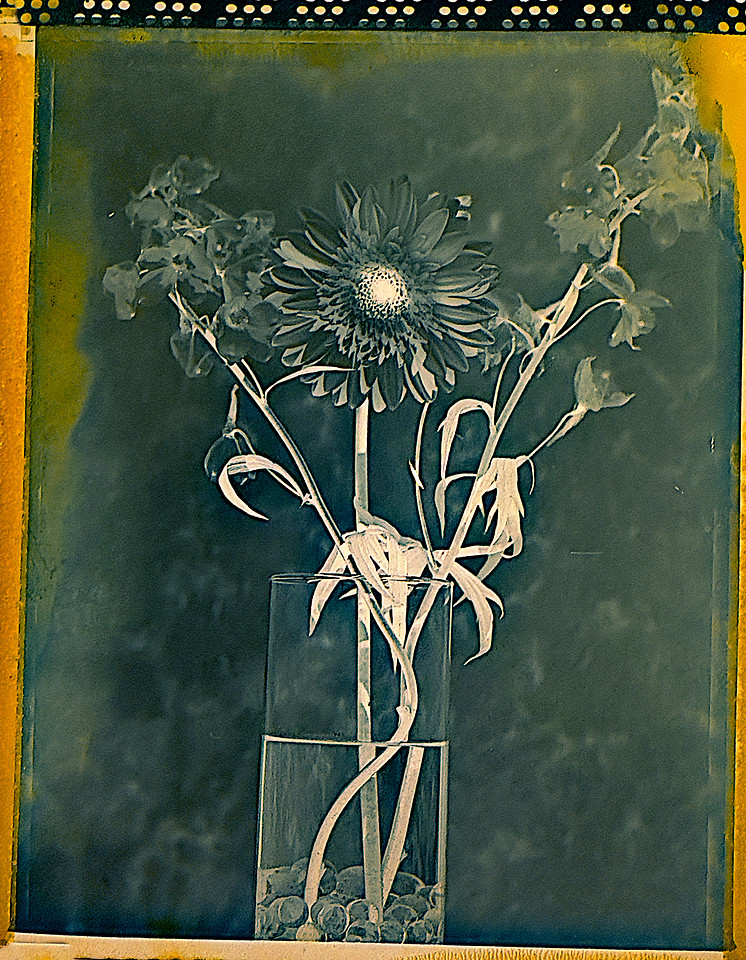
The more I look at this final piece, the more I see things that all speak to the purposeful intention aspects of the other Japanese arts. Even the background (a type of Japanese paper, if memory serves), beautifully enhanced by the digital post-processing, reminds me of the Chinese and Japanese landscape drawings of misty mountain scenes. The combination of purposeful intention and intuitive recognition of what could not be foreseen or intended are two halves of a creative process that together create a harmonious whole.